
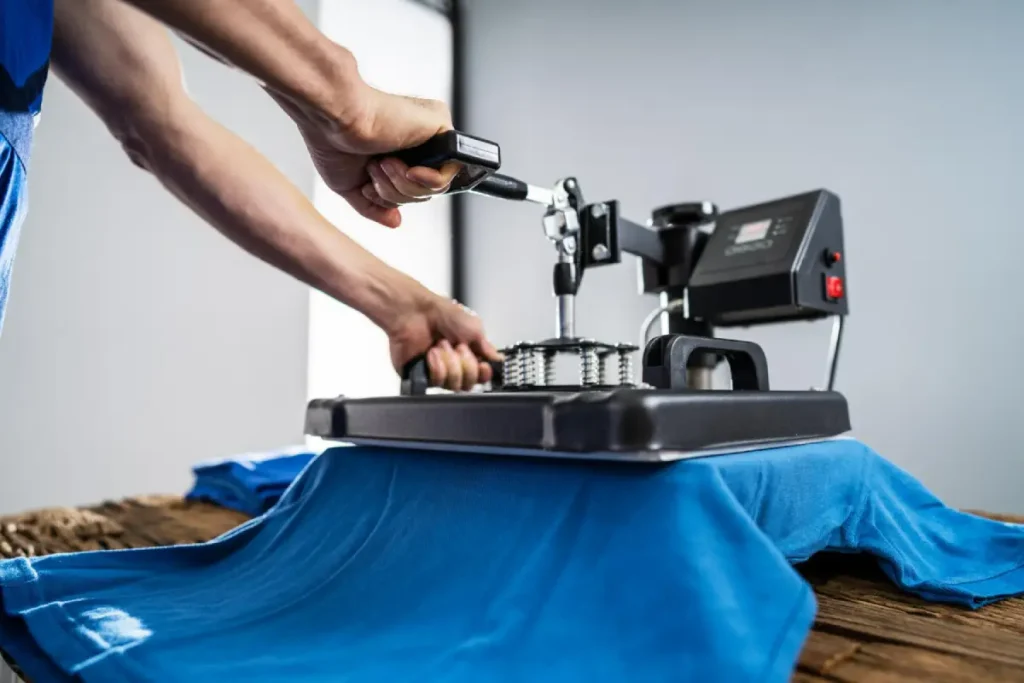
Success in the custom apparel market is no longer found by simply buying a printer and calling it a day. The market is saturated with “good enough” prints, and to secure a spot in the premium retail sector, you must stop thinking like a printer and start thinking like a textile technologist. The secret to a long-lasting, high-value garment isn’t just the ink—it’s the interfacial adhesion between your transfer and the fiber. Harwin advocates for a shift toward “Micro-Control,” where every millisecond and every ounce of pressure is accounted for.
When you apply a dtf transfer, you are essentially facilitating a molecular merger. If the environment, the temperature, or the pressure isn’t perfectly tuned, that merger remains incomplete, leading to the “sticker-like” feel that instantly devalues your product. To move your brand into the top tier, you need to abandon guesswork and adopt a protocol-driven workflow.
The Production Lab: Controlling the Uncontrollable
Most print shops lose money on returns and rework. This is almost always caused by a failure to control the variables that exist *before* you press. To build a brand that stands the test of time, implement these three mandatory operational rules:
- The Humidity Baseline: Adhesive powders are hygroscopic. If your shop environment isn’t dehumidified, your powder is absorbing water vapor from the air, creating microscopic voids during curing. Store all your consumables in sealed, desiccant-protected containers.
- The Pressure Delta: Most heat presses are not perfectly balanced. Use a force-indicating film to verify that your platen provides equal PSI across its entire surface. A print that is bonded in the center but weak at the edges will always fail at the edges.
- The Thermal Memory: Fabrics have a “thermal memory.” If you don’t use a consistent pre-press to neutralize the fabric, the material will contract or expand during the transfer process, leading to ghosting or bond misalignment.
Logistical Strategy: Moving Beyond Commodity Shipping
Stop paying for the privilege of waiting. Relying on remote suppliers for your inventory creates a massive buffer of “dead time” that kills your ability to respond to market trends. Searching for dtf transfers near me is the most effective way to collapse your supply chain. When you work with a high-end local provider, you get more than just film—you get a partner who can help you prototype finishes that your competitors aren’t even aware of yet.
This allows your business to operate as a “Demand-Pull” entity. You don’t need to guess which designs will sell and print 500 of them. You can produce in small, agile batches, test the market, and scale up instantly. This is the definition of modern, low-risk, high-margin apparel manufacturing.
The “Stress-Audit” Culture
If you aren’t trying to break your own products, you don’t know how good they are. A “Stress-Audit” should be a weekly routine. Take one garment from every production batch and put it through a “Destroy-Cycle”: high-heat washes, intense agitation, and extended tumble drying. If you can confidently say your product survived this level of abuse, you have moved beyond the “custom shop” category.
When you present your brand to a boutique or a retail buyer, don’t talk about your colors. Talk about your wash-test metrics. When you provide data—such as “this print retains 98% opacity after 50 industrial cycles”—you change the power dynamic of the sale. You are no longer asking for a chance; you are presenting a superior, tested, and reliable asset.
Frequently Asked Questions
What is the biggest mistake operators make during the heat-press phase?
Ignoring the “dwell-time ramp-up.” Heat presses are not instantaneous. If your press is 300°F, it takes a few seconds for the platen to recover after it touches the fabric. Account for this “recovery time” by slightly extending your dwell time to ensure the adhesive actually reaches the target melting temperature.
How can I achieve a “soft-hand” finish on large designs?
Use “Gradient-Dithering” in your RIP software. By printing with a halftone pattern rather than a solid block of color, you reduce the total volume of ink/adhesive required, which keeps the print flexible and breathable while maintaining the visual design.
Why do some prints crack while others from the same batch are fine?
This is almost always a result of fabric-specific thermal absorption. A dark, heavy-weave garment absorbs heat differently than a light-weight, synthetic blend. Always calibrate your temperature for the specific garment density, not just the “default” setting.
How do I know if my adhesive powder is past its prime?
Check the “flow-point.” Take a small sample of powder and heat it on a piece of scrap film. If it doesn’t melt into a uniform, clear, sticky liquid almost instantly, it has absorbed too much moisture or has aged, and should be discarded.
Building a top-tier apparel brand is a journey of continuous technical refinement. By mastering the potential of dtf, you position your brand to compete at the highest level of the custom merchandise market. Harwin is committed to providing the industry insights you need to turn your production floor into a professional, profitable enterprise. Start optimizing your workflow today—your commitment to quality is the most valuable investment you can make for your brand’s future.