
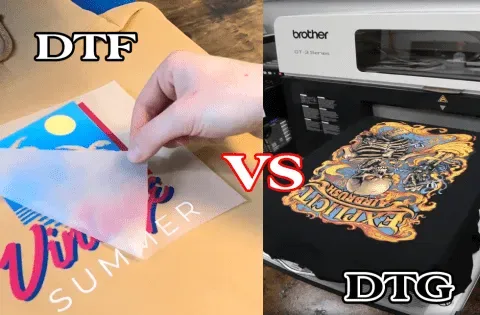
DTF vs DTG drives decisions for apparel brands. To understand the core differences—film-based transfers versus direct-to-fabric inks—helps you map costs, quality, and scalability. This article weighs DTF printing advantages against DTG printing costs and examines how each approach serves different business goals. From bold color on a wide fabric range to soft hand-feel on cotton tees, you’ll see how your product mix and order sizes influence the choice. By the end, you’ll have a practical framework for choosing among DTF vs DTG printing for apparel, the best method for apparel business, and considerations for bulk orders DTG vs DTF.
Think of the choice as film-based transfer versus direct-to-fabric printing. The film-based route relies on a printable sheet coated with adhesive, bonded to fabric for durable, color-rich results across many substrates. In contrast, direct-to-fabric printing applies inks directly to the fibers, delivering a softer hand-feel and sharp detail on compatible textiles. These alternatives map to related concepts such as color vibrancy, wash durability, and production scalability, guiding readers toward a balanced understanding of the technology landscape.
DTF vs DTG: Key Differences That Drive Your Printing Strategy
Direct-to-Film (DTF) and Direct-to-Garment (DTG) are the two most versatile digital garment printing methods today, and understanding their core mechanics is the first step in choosing the right path for your brand. DTF uses a printed film with adhesive powder that is cured and pressed onto fabrics, delivering vibrant color on a wide range of materials. DTG prints directly on fabric using textile inks that are absorbed by fibers, offering a soft hand feel on light fabrics and high-detail imagery on suitable bases. Recognizing these fundamental differences helps you map product requirements to process capabilities and set realistic expectations for cost, durability, and turnaround.
From a design perspective, DTF printing advantages include strong color punch and reliable performance across diverse garment colors, especially when you need consistent results on light and dark fabrics. DTG, meanwhile, shines for complex gradients and subtle shading on cotton, with potential for ultra-soft hand feel when paired with proper pretreatment and curing. By comparing these strengths directly, you can determine whether a collection benefits from a bold, film-based transfer or a high-detail direct-on-fabric approach. It’s common for brands to use both methods to serve different lines or client demands, a strategy that aligns with the idea of flexible production.
Cost Structures and Total Ownership for DTF and DTG
Upfront machinery costs are just the start. DTG printing costs often reflect premium hardware, specialized inks, pretreatment, and maintenance, leading to higher initial investments and ongoing consumables. DTF tends to offer lower entry costs per unit and simpler maintenance in many shop setups, with consumables like film, glue powders, and curing energy shaping the ongoing expense profile. For a growing apparel business, this distinction can influence whether you scale with a DTG platform for small runs or lean toward a DTF workflow for bulk production.
Total cost of ownership (TCO) matters more than sticker price when you consider downtime, waste, and job-changeover time. If your model emphasizes frequent design changes or high color complexity in small batches, DTG printing costs may still be cost-effective due to faster setup for one-off orders. Conversely, DTF can deliver lower per-unit cost in high-volume runs once workflow is optimized, making it attractive for wholesale fulfillment and event merchandise. Evaluating these factors against your expected mix of products helps determine the most economical system over the long term.
Quality, Color, and Texture: What Customers Notice
Customer perception rests on vividness, edge sharpness, and how a print feels against the garment. DTF printing advantages include bold color saturation, clean edges, and reliable transfer across a variety of fabric bases. This film-first approach provides stable color reproduction even on darker garments, reducing surprises in finished goods and helping maintain consistent branding.
DTG excels when you prioritize a soft hand-feel and fine detail on suitable substrates. With optimized pretreatment and high-end printers, DTG can reproduce photographic imagery with smooth gradients on cotton and light-colored fabrics. This performance makes DTG ideal for boutique lines that emphasize texture and subtle shading, while DTF remains the choice for bold graphics across mixed fabrics.
Production Speed, Scalability, and Bulk Orders
When speed to market and volume matter, DTF can streamline production by batching prints on film and building press sequences that scale efficiently for bulk orders. This approach reduces changeover time and helps you keep a predictable schedule for wholesale orders, events, or merchandise launches. The ability to pre-stage films and standardize curing makes DTF a strong fit for mid-sized runs with consistent designs.
DTG brings agility to single-item orders and rapid customization, offering fast turnaround for low-volume, high-value pieces. However, the bottlenecks—pretreatment, curing, and color management—mean DTG shines best in scenarios where order frequency is high but batch size is small. Many brands adopt a hybrid strategy: DTG for high-margin, low-volume items and DTF for bulk production, a combination that aligns with bulk orders DTG vs DTF.
Substrates and Fabric Compatibility: Matching Designs to Materials
Fabric selection plays a pivotal role in how well a transfer performs. DTF generally handles a wide range of fabrics—cottons, blends, poly blends—with reliable adhesion due to the film and the adhesive layer. This flexibility makes DTF a practical choice when your catalog includes varied garment colors and weights, as you can keep a consistent look across materials.
DTG typically performs best on 100% cotton and light-colored fabrics where ink uptake and pretreatment are optimized. Dark fabrics can complicate results, requiring additional white underbase layers and color adjustments. For product lines that emphasize photographic detail or soft textures on cotton, DTG is a strong fit; for bold graphics across mixed fabrics, DTF often delivers more predictable outcomes.
Decision-Making Framework: Choosing the Right Method for Your Brand
To determine the best method for your apparel business, start with a practical framework that weighs product mix, volume, and cost. Define whether your catalog leans toward color-rich designs on dark garments or simple graphics on cotton tees, then estimate how often you’ll run bulk orders versus custom items. This framing helps you map requirements to DTF printing advantages and DTG strengths.
Finally, plan for growth with a strategic mindset. Consider a hybrid approach that uses DTG for premium, low-volume pieces and DTF for bulk production, enabling you to scale while controlling costs and timelines. Emphasize testing across fabrics and designs, and measure outcomes against the goal of delivering high-quality, durable garments that satisfy customers and support a scalable business. This aligns with the broader question of DTF vs DTG printing for apparel and guides you toward the best method for your apparel business.
Frequently Asked Questions
DTF vs DTG: What are the key DTF printing advantages for apparel?
DTF vs DTG: Key DTF printing advantages for apparel include strong color vibrancy across many fabrics and reliable edge definition. The film-adhesive transfer sits on the surface before pressing, which can make color handling more forgiving and simplify multi-color designs. This makes DTF a solid choice for bold graphics and varied fabric mixes.
DTG printing costs vs DTF: which is more cost effective for bulk orders?
DTG costs vs DTF: which is more cost effective for bulk orders? DTG typically has a higher upfront investment and ongoing pretreatment and ink costs. DTF often offers lower upfront costs and lower per-unit consumables once workflows are optimized. For bulk orders, DTF can provide a lower per-unit cost and simpler maintenance, though results depend on fabric choice and design complexity.
DTF vs DTG printing for apparel: which method is best for your product mix?
DTF vs DTG printing for apparel: which method is best for your product mix? For mixed product lines, DTF shines with reliable results across a wide range of fabrics and colors, and strong throughput for bulk runs. DTG excels on premium cotton with high-detail imagery and a soft hand feel. Many shops use a hybrid approach to cover both lines and optimize costs.
DTF vs DTG printing for apparel: which method offers the best balance of color, durability, and fabric compatibility?
DTF vs DTG printing for apparel: which method offers the best balance of color, durability, and fabric compatibility? DTF delivers bold color and durable transfers across diverse fabrics, including blends and dark garments. DTG provides an exceptionally soft hand-feel and sharp detail on 100% cotton when pretreatment and ink cycling are optimized. Durability depends on curing, fabric, and under-base handling; testing on typical fabrics is recommended.
Bulk orders DTG vs DTF: which method offers faster throughput and lower per-unit costs?
Bulk orders DTG vs DTF: which method offers faster throughput and lower per-unit costs? DTF supports batch processing with films prepared in advance, which can speed large runs. DTG is usually faster for single-item orders but slower for large volumes due to pretreatment and curing. For true bulk production, DTF often yields better throughput and unit costs, though design complexity and equipment affect the outcome.
DTF vs DTG: what factors should influence a small apparel business when choosing the best method for apparel business?
DTF vs DTG: what factors should influence a small apparel business when choosing the best method for apparel business? Consider product mix, volume, cost per unit, lead times, and desired hand feel. Fabric compatibility, color requirements, and durability are also critical. A trial across your most common fabrics and a hybrid approach can help you optimize both quality and efficiency.
| Topic | DTF | DTG | Key Points |
|---|---|---|---|
| Understanding the Technology | Film-based transfer printed on film with special inks, then coated with adhesive powder, cured, and heat-pressed onto the garment; color embedding comes via the film transfer. | Direct-to-Garment printing onto fabric; inks are absorbed by fibers; quality depends on printer, ink system, and fabric. | DTF uses film+adhesive transfer; DTG relies on fabric absorption and ink systems. |
| Strengths: Color & Print Texture | DTF delivers vibrant color and strong edge definition across many fabrics; image sits on film surface before transfer. | DTG yields very soft hand-feel prints with excellent detail on cotton/light fabrics; best when setup is optimized. | DTF: bold color across fabrics; DTG: soft hand-feel and fine detail on cotton. |
| Durability & Wash Performance | Good durability when properly cured; adhesion via film reduces cracking/peeling; works across blends. | Durability depends on fabric, pretreatment, curing, and ink; very durable on 100% cotton with proper setup; mixed results on blends/dark fabrics. | DTF: strong wash durability with proper cure; DTG: highly dependent on prep and fabric. |
| Production Speed, Scheduling & Scalability | Efficient for larger runs with batch preparation and sequence pressing; scalable for bulk production. | Fast for single-item orders; pretreatment, curing, and color management can be bottlenecks; hybrid approaches common. | DTF suits bulk runs; DTG suits fast single-item turns; many shops blend methods for scale. |
| Substrates, Garment Types & Design Considerations | Wide range of fabrics with reliable adhesion; stable base colors help complex artwork. | Best on 100% cotton and light fabrics; dark fabrics require more white underbase and color adjustments. | Choose the method based on fabric mix and design requirements. |
| Case Scenarios: When to Choose DTF or DTG | Good for small to mid-sized shops with varied colors/fabrics; standardized color results and scalable for wholesale. | Ideal for premium cotton tees with photographic imagery; rapid customization and print-on-demand; boutique lines. | DTF for versatility and scale; DTG for high-detail, soft-hand cotton; many brands use a hybrid approach. |
| A Practical Framework for Decision-Making | Define product mix, volume expectations, cost per unit, and growth potential; consider a hybrid setup. | Evaluate color requirements, durability, and fabric variety; plan for growth and flexibility. | Use a side-by-side testing approach to validate which method meets goals now and as demand evolves. |
| Quality Assurance & Testing | Establish QA for every run; print test garments; wash per care instructions; track color retention and edge sharpness. | Maintain a library of test fabrics to cover common orders; ensures new batches meet expectations. | QA is essential for both methods to protect consistency and customer satisfaction. |
| Environmental & Sustainability Considerations | Film+adhesive processes in DTF can use less water than some DTG pretreatment/ink systems; energy and waste still matter. | DTG pretreatment and inks have environmental footprints; assess energy, water use, and waste streams for optimization. | Each shop should perform a sustainability assessment to optimize ecological impact. |
| Bottom Line: Choosing the Best Method | DTF offers robust color on many fabrics, predictable costs, and scalable throughput. | DTG delivers premium texture and high-detail imagery on cotton with fast turnarounds for custom orders. | For many brands, a hybrid approach that leverages both methods often provides the best balance of cost, speed, and quality. |
Summary
Conclusion: a balanced approach to DTF vs DTG can align production capabilities with business goals. The choice should reflect product mix, volume, and desired outcomes—color, detail, hand feel, and durability—while remaining adaptable to growth. Testing on your actual fabrics and orders helps confirm which method, or which hybrid of DTF and DTG, will scale your apparel brand most effectively while controlling costs and timelines.